Kshitij Goel Robotics Researcher

GIRA: Gaussian Mixture Models for Inference and Robot Autonomy

ICRA · 2024

How do we create a unified framework for basic robot perception tasks: reconstruction, occupancy modeling, registration, and SLAM using a compressed scene representation that can be used for downstream decision-making and motion planning tasks?

Kshitij Goel Wennie Tabib

This paper introduces the open-source framework, GIRA, which implements fundamental robotics algorithms for reconstruction, pose estimation, and occupancy modeling using compact generative models. Compactness enables perception in the large by ensuring that the perceptual models can be communicated through low-bandwidth channels during largescale mobile robot deployments. The generative property enables perception in the small by providing high-resolution reconstruction capability. These properties address perception needs for diverse robotic applications, including multi-robot exploration and dexterous manipulation. State-of-the-art perception systems construct perceptual models via multiple disparate pipelines that reuse the same underlying sensor data, which leads to increased computation, redundancy, and complexity. GIRA bridges this gap by providing a unified perceptual modeling framework using Gaussian mixture models (GMMs) as well as a novel systems contribution, which consists of GPUaccelerated functions to learn GMMs 10-100x faster compared to existing CPU implementations. Because few GMM-based frameworks are open-sourced, this work seeks to accelerate innovation and broaden adoption of these techniques.

Figures

System Details GIRA has been deployed on size, weight, and power constrained aerial systems in real-world and unstructured environments. A single aerial robot flies through an industrial tunnel and generates a high-fidelity Gaussian mixture model (GMM) map of the environment. A close-up view of the reconstructed area around the robot is also shown. A team of two robots fly through a dark tunnel environment and produce a map, which is resampled from the underlying GMM and colored red or blue according to which robot took the observation.
Reconstruction Workflow
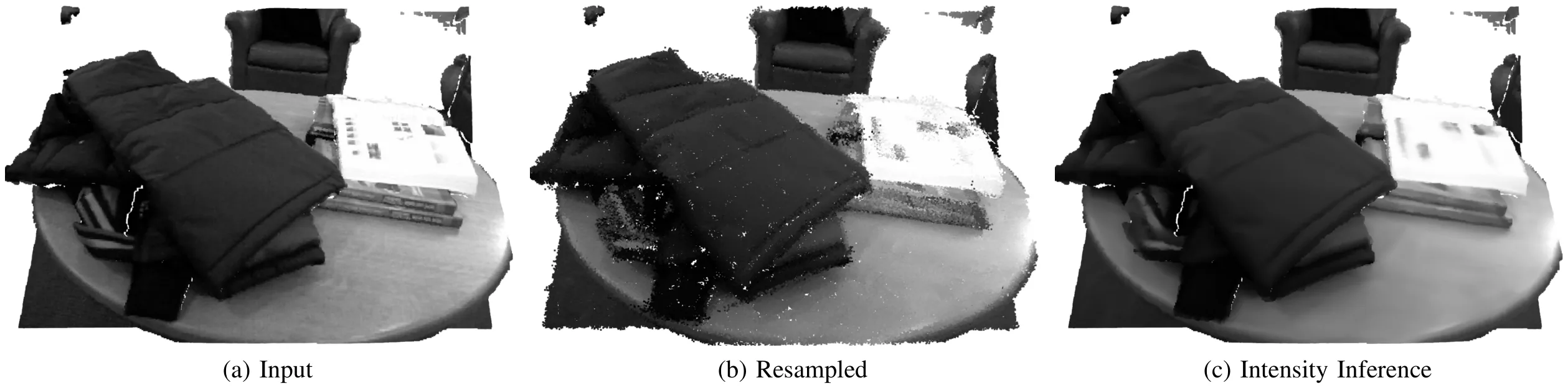
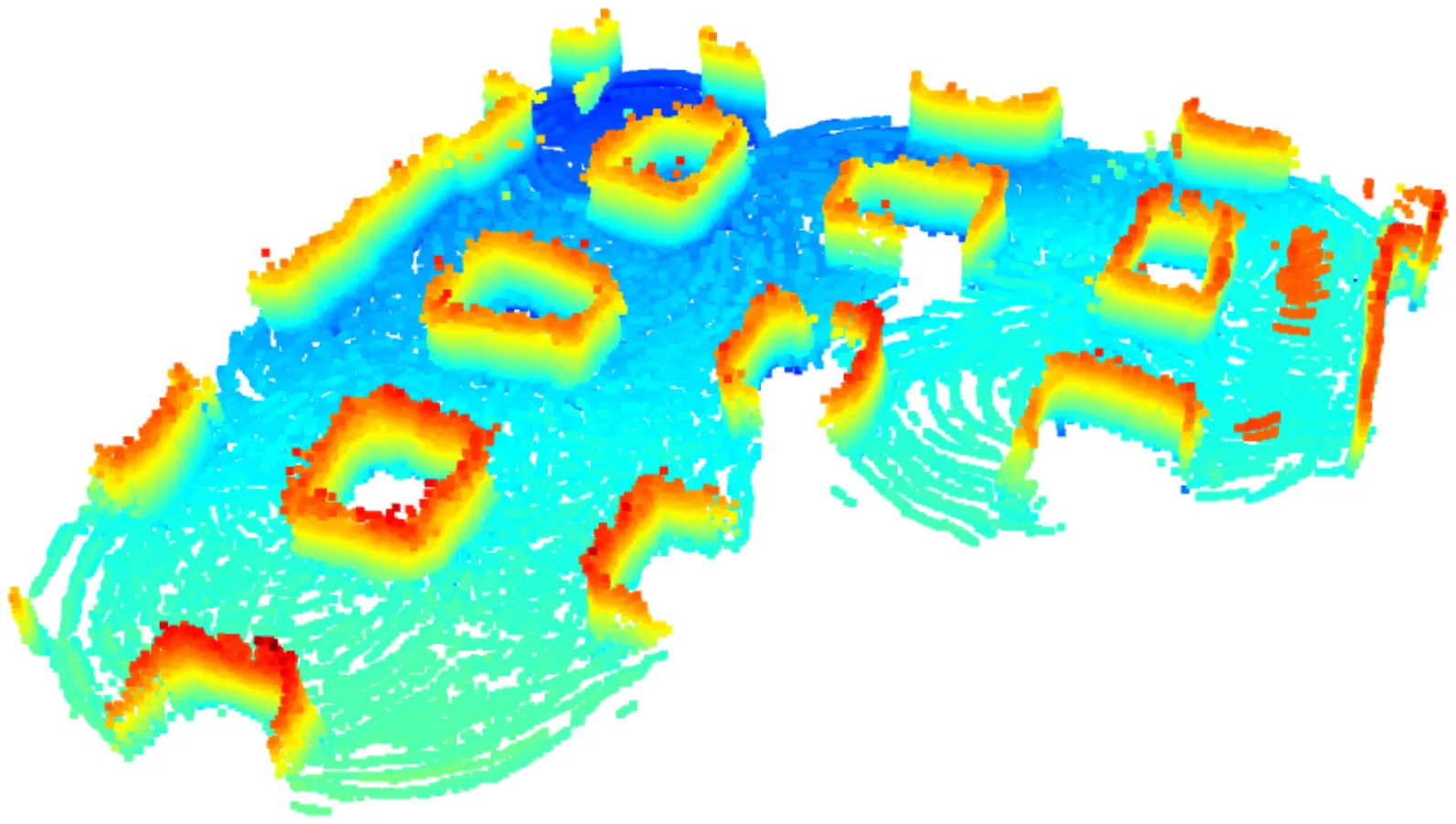
Reconstruction Workflow An example workflow for GIRA Reconstruction Section IV-A. The input is a depth-intensity point cloud shown in (a). The resulting model can be resampled to generate novel 4D points (b) or be used to infer expected intensity values at known 3D locations (c).
GPU Acceleration Benchmarks
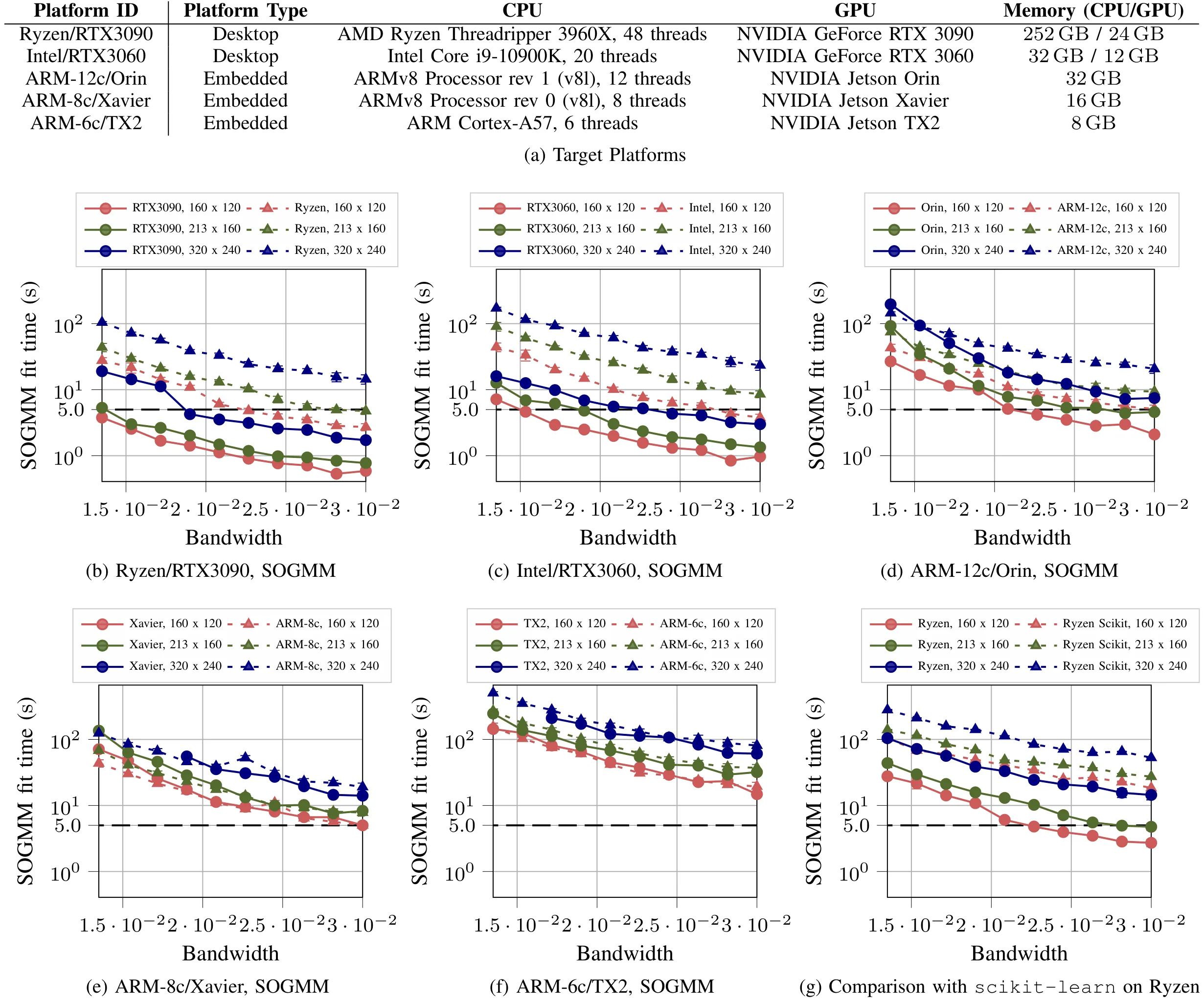
GPU Acceleration Benchmarks Comparison of SOGMM computation time via GIRA Reconstruction on the target platforms listed in Fig. 3a. In (b) and (c) the GPU-accelerated case on the desktop platforms provides more than an order of magnitude improvement in timing compared to the CPUonly case for most image sizes. The results of the embedded platforms shown in (d), (e) and (f) demonstrate that the relative performance improvements seem to degrade with increasing SWaP constraints. In any case, (g) shows that our CPU implementation performs nearly an order of magnitude faster than a reference SOGMM implementation using scikit-learn.
Point Cloud Registration
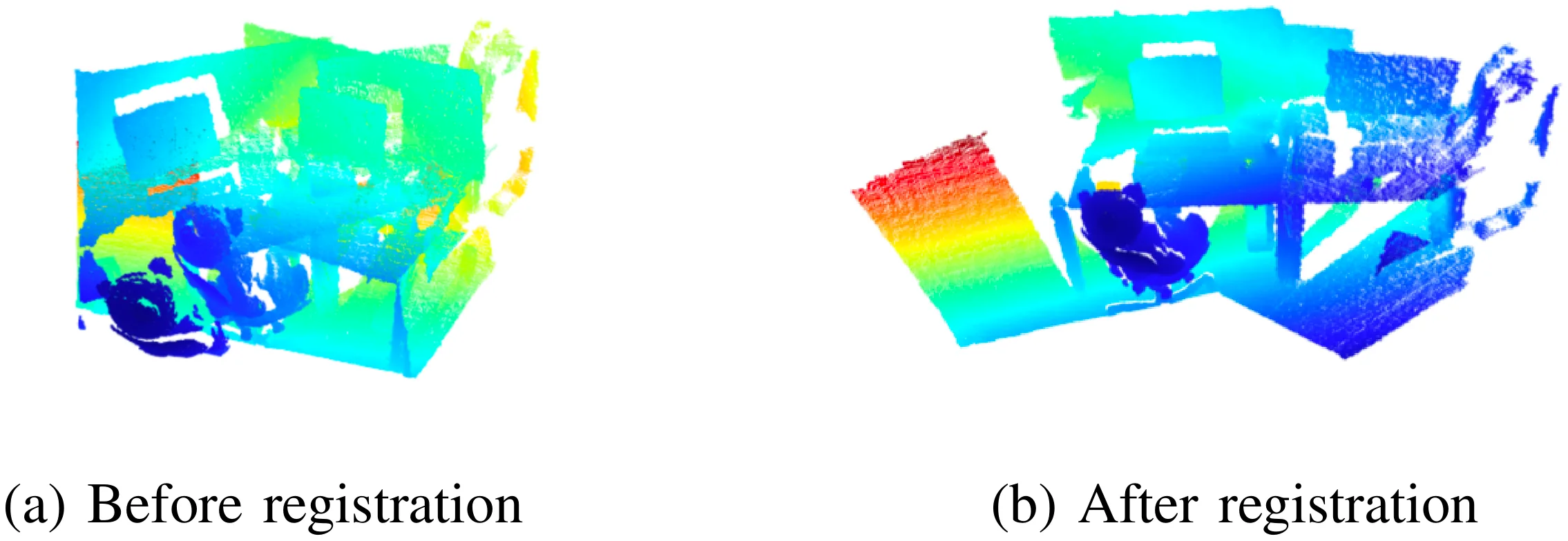
Point Cloud Registration The point clouds in (a) are originally misaligned. (b) The code in Section IV-B estimates the SE(3) transform to align them.
Loop Closure
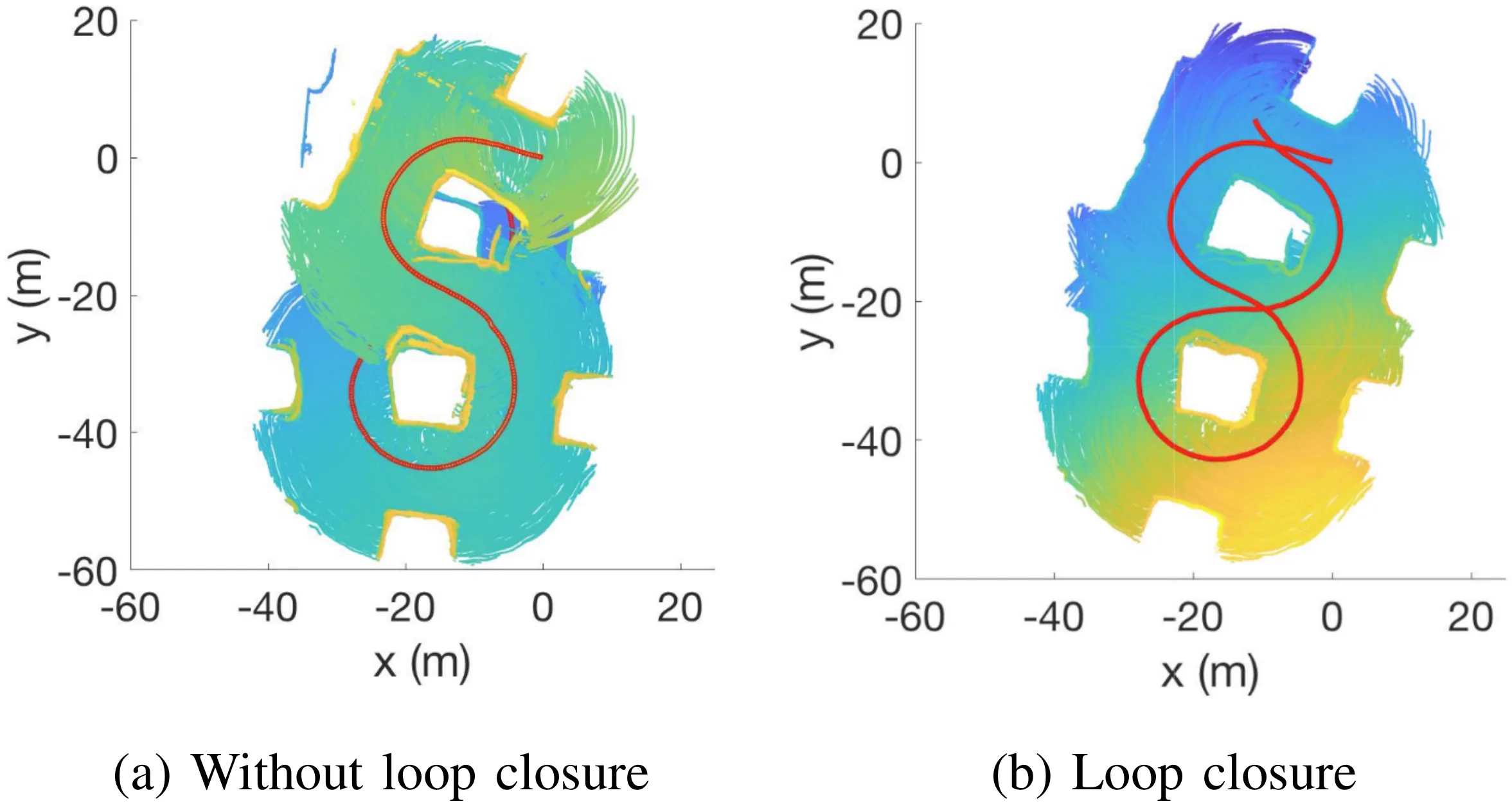
Loop Closure The trajectories reconstructed using (a) frame-to-frame registration and (b) with loop closure is enabled are shown with the pointclouds plotted.
Occupancy Modeling
Occupancy Modeling Resampled points from a GMM are added to an occupancy grid map and the occupied voxels are queried and visualized.
Adaptive Modeling Pipeline
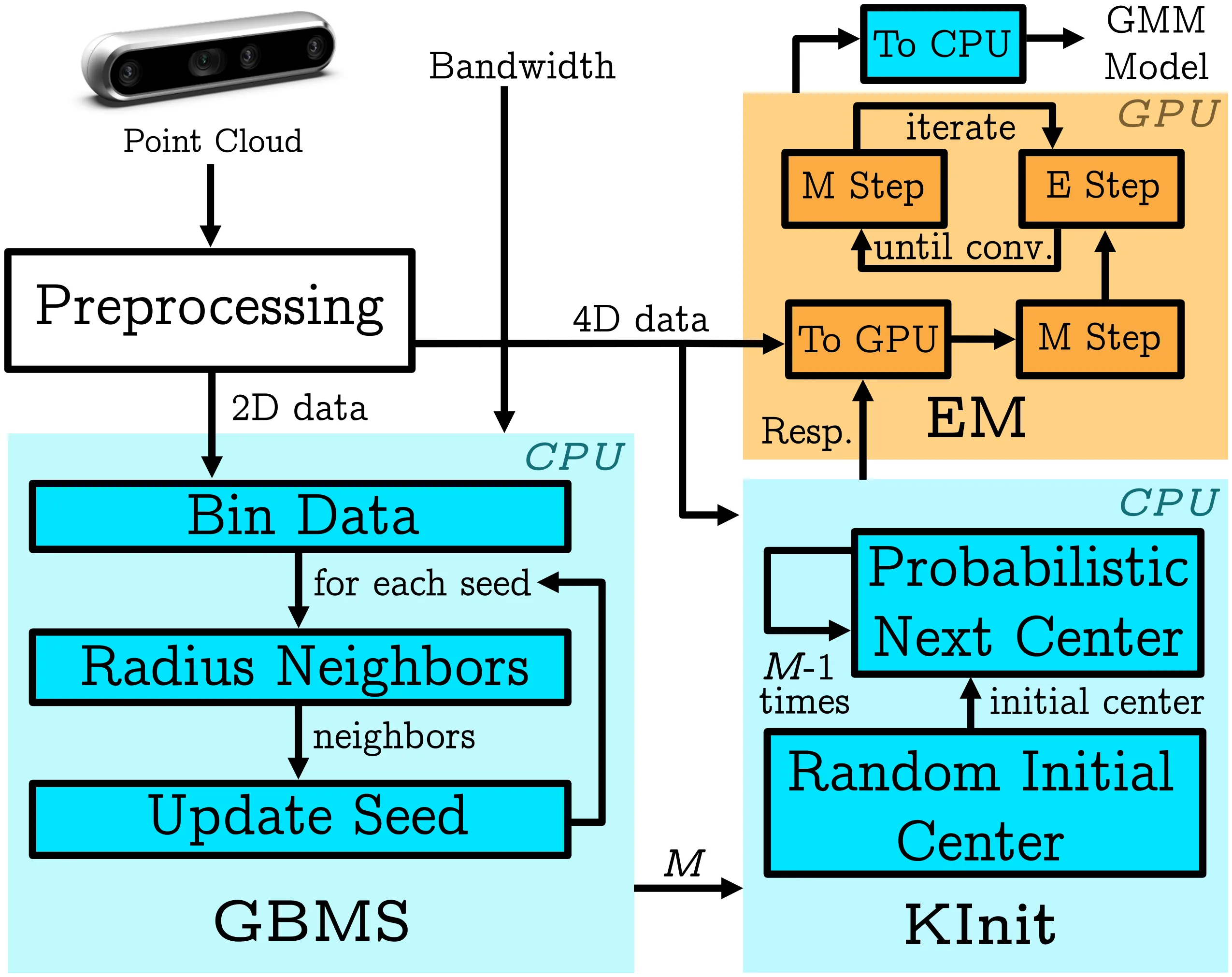
Adaptive Modeling Pipeline Information flow for the GPU-accelerated adaptive point cloud modeling system. Given a bandwidth parameter and depthintensity image pair, the Gaussian Blurring Mean Shift (GBMS) obtains the number of components |B|. The number of components and the 4D data are used by KInit to calculate the responsibility matrix used by the EM algorithm. The result of the EM algorithm is the SOGMM model [7].

BibTeX

@inproceedings{goel2024gira,
	title={GIRA: Gaussian Mixture Models for Inference and Robot Autonomy},
	author={Goel, Kshitij and Tabib, Wennie},
	booktitle={2024 IEEE International Conference on Robotics and Automation (ICRA)},
	pages={6212--6218},
	year={2024},
	organization={IEEE}
}